

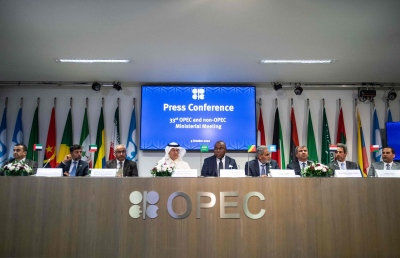
The global oil market is entering a period of unprecedented uncertainty, as one of the world's most influential countries on the energy map proceeds with a move already characterized as a historic rupture. The United Arab Emirates (UAE) announced their withdrawal from OPEC and the OPEC+ alliance, effective May 1, 2026, sending shockwaves through international markets and raising intense concerns over the future of oil price stability.
The UAE Minister of Energy and Infrastructure, Suhail Al Mazrouei, was clear: "We believe the world will need more energy in the future, and exiting OPEC and OPEC+ will allow us to meet these needs while continuing to cooperate with partners and investors." However, behind the diplomatic language, markets perceive something far more alarming: the beginning of the end for the unified production discipline that for decades kept oil prices in check.
It is worth noting that this development was warmly received by the White House as a victory for Trump, who for years has openly attacked OPEC, accusing it of distorting oil prices through artificial supply adjustments instead of letting the market operate freely. In a sharp-toned speech at the UN General Assembly in 2018, he accused the organization of "exploiting the rest of the world." Clearly, the departure of the United Arab Emirates constitutes a heavy blow to the future of OPEC, as it strikes at the very core of its existence. Notably, WTI oil has surpassed $100 and Brent $110.
The end of quotas
By exiting OPEC, the United Arab Emirates are no longer bound by production quotas and gain full freedom to produce and export oil according to their own strategies and market interests. This move, which does not appear to have been coordinated with other members of the cartel, is already being viewed by analysts as a severe blow to OPEC's unity and, primarily, to the cohesion imposed by Saudi Arabia as the de facto leader.
According to Reuters, this development could prove to be a strategic defeat for Riyadh, while it is simultaneously estimated that it may completely reshape the balance of power in the Middle East. Even more explosive is the political dimension: international analysts leave open the possibility that the decision is indirectly linked to pressure from Donald Trump, who in the past had accused OPEC of artificially inflating oil prices and had linked American military support for Gulf states to their energy policy.
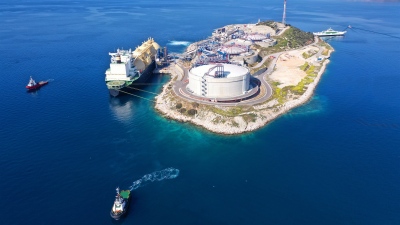
Geography, however, does not forgive political experimentation. The United Arab Emirates possess critical infrastructure, such as the port of Fujairah, one of the most important tanker refueling hubs in the region, as well as the strategic Habshan–Fujairah pipeline, which allows oil transport bypassing the vulnerable Strait of Hormuz.
However, the existing capacity of the system covers only 36–50% of the country's total exports, meaning that even with full utilization of the infrastructure, over 1.7–2 million barrels per day will still depend on passage through the Persian Gulf. This renders the energy strategy of the United Arab Emirates vulnerable to geopolitical tensions, especially in the absence of a stable agreement with Iran.
Attacks, instability, and the ghost of conflict
The situation is exacerbated by the fact that port infrastructure has already been targeted. In March, drone attacks caused temporary paralysis at critical facilities, and even after partial restoration, the Mena Fujairah terminal remains at limited capacity due to damage.
Until a substantial peace agreement with Iran is reached, the strategy of the United Arab Emirates to increase revenue through full production flexibility seems to stumble upon the reality of regional security. At the same time, a potential drop in oil prices following a supply increase could severely impact the Emirates' state budget, creating a dangerous vicious cycle.
For the global economy, the withdrawal of the United Arab Emirates from OPEC signals something deeper than a simple change in production quotas: the end of the era of relatively predictable oil prices. The UAE represents the third-largest member of OPEC in terms of quotas, and its departure is not merely a technical detail—it is a structural crack in the very edifice of the global energy balance. The decision is considered purely political and may reshape decades-old alliances, while it is already causing concern over a potential wave of instability in energy markets.
A new energy landscape under formation
Abu Dhabi had joined OPEC as early as 1967, even before the creation of the unified state of the United Arab Emirates in 1971. Today, nearly six decades later, it appears to be turning the page, opening a new chapter of uncertainty. OPEC, founded in 1960 by countries such as Iran, Iraq, Kuwait, Saudi Arabia, and Venezuela, along with the OPEC+ structure that incorporated major independent producers like Russia, controls approximately half of global oil production.
The withdrawal of the United Arab Emirates, if fully confirmed in practice, is not simply an exit from an organization. It likely represents the beginning of a new era of energy anarchy, where geopolitics will dictate prices more intensely than ever. And in this new landscape, nothing can be taken for granted anymore.
The crisis threatening to change the world as we know it
Meanwhile, global oil prices have skyrocketed to levels causing intense concern in markets and government mechanisms, with the hydrocarbon market being, according to analysts, "in a deep and multi-level crisis." Russian Deputy Prime Minister Alexander Novak warns that the situation is particularly critical, as a large number of barrels have not reached the market, while tankers remain trapped in the Strait of Hormuz. As he emphasizes, it will take "several months" to restore balance, if that ultimately becomes possible.
Bloomberg points out that, for the time being, the crisis has not led to a collapse in demand. However, traders warn that even a potential prolonged closure of Hormuz will trigger chain reactions, leading to a sudden reversal of the energy balance.
According to Stanislav Mitrakhovich, a leading expert at the National Energy Security Fund and the Financial University under the Government of the Russian Federation, the market is already in a dangerous price divergence: futures contracts are trading significantly lower than spot prices, a fact that "suggests a potential physical shortage of oil if the crisis continues." Concern is heightened by the fact that, as noted, uncertainty has begun to spill over into petroleum products, which are increasing at a faster rate than crude oil itself. The market, as highlighted, is "betting" on a rapid de-escalation, but without any guarantee that this will occur.
A world of unequal endurance
The emerging picture is starkly unequal. Rich countries, for the time being, do not face immediate shortages. Conversely, poorer regions, such as Southeast Asia and parts of Africa, have already reduced or nearly zeroed out fuel imports. However, even developed economies are estimated to be able to endure for only a few months before strategic reserves begin to deplete.
The historical reference to the 1973 oil crisis is returning threateningly to the forefront. As emphasized, the explosive rise in prices could act as a catalyst for a new global shift toward green technologies, but also toward alternative forms of energy, such as nuclear power, albeit with new geopolitical and technological risks.
For Russia, the rise in prices is a double-edged reality. On one hand, oil companies and the federal budget benefit significantly. On the other hand, uncertainty remains dominant. Economist Nikita Maslenikov points out that, despite the rise of Urals to $99 per barrel in April, conditions remain fragile.
The temporary operating license for Russian oil activities granted by the US until May 16 adds another layer of instability. Although budget revenues are expected to be significantly bolstered, the increase in transportation costs, logistics, and settlements threatens to "erode" the benefits.
According to estimates, the Russian oil industry is now operating under a regime of almost "manual management," with state agencies intervening directly in supply agreements. The strategy, however, remains unclear, as the balances between internal pricing, exports, and tax mechanisms are extremely fragile.
The most alarming scenario concerns the duration of the crisis. Estimates suggest that high oil prices may be maintained for three to five years, with full restoration of global flows remaining uncertain. Europe, according to the same estimates, will not return to Russian supplies before a political solution is reached on the Ukrainian issue, while the transition toward green or nuclear energy remains full of challenges.
www.bankingnews.gr




Σχόλια αναγνωστών